Time Banks: Where Money Ends and the Human Economy Begins


Time Banks: Where Money Ends and the Human Economy Begins
What if the currency of the future isn’t money—but your time?
Imagine a world where your paycheck doesn’t come in dollars, euros, or lira—but in hours. You don’t work for survival. You contribute to your community and, in return, the community supports you. Welcome to the radical idea of the Time Bank—a system that may become a real alternative in the age of AI, automation, and decentralized finance.
What Is a Time Bank?
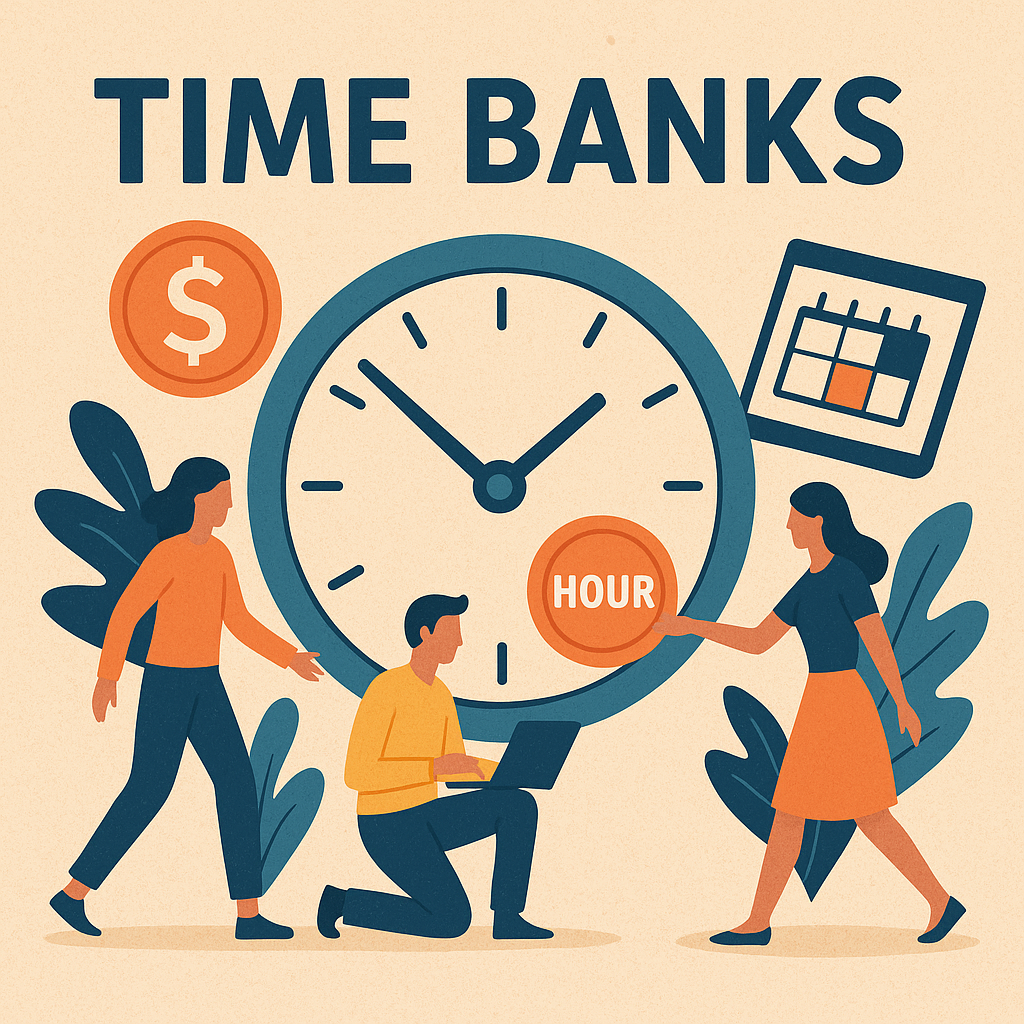
A Time Bank is a system where people exchange services using time as currency. If you babysit for someone for 1 hour, you earn “1 hour” in your account. Later, you can use that hour to get help from someone else—like a plumber, a tutor, or a graphic designer. It’s not about the market value of the task. It’s about the time spent.
This flips the capitalist model on its head. In a Time Bank, everyone’s time is worth the same, whether you’re a doctor, mechanic, or barista.
Why Haven’t You Heard of This?
Simple: it challenges the very foundations of our financial system. When people trade time instead of money, banks, corporations, and governments lose control over economic exchange. That’s why it’s rarely discussed in mainstream media.
But after global crises, rising unemployment, and burnout from the “hustle culture,” the idea of community-driven, value-based economies is gaining traction again.
The Tokenization of Time
Just as Bitcoin tokenized money, imagine a blockchain where hours are tokenized. Your digital wallet doesn’t show a balance in coins—it shows hours you’ve earned through service. No middlemen, no inflation. Just pure, traceable value tied to human contribution.
This is no longer science fiction. Pilot projects are being explored in communities across the globe. And one day, we may see platforms where a video editor in Brazil trades two hours of work with a gardener in Canada. No cash involved.
Why It’s Revolutionary
- No one is excluded because of lack of money.
- All work is honored equally.
- It promotes community, empathy, and human connection.
- The unemployed, elderly, or disabled can become active contributors again.
Real-Life Example: Japan’s Fureai Kippu
Japan has quietly been running a time banking system called Fureai Kippu since the 1990s. Young people earn credits by helping the elderly. Later, those credits can be used for their own parents’ care—or saved for their own retirement. It’s social care powered not by taxes, but by time.
What If Time Becomes the New Gold?
As we move toward a decentralized future, with AI doing more of the work and Universal Basic Income being debated, what will humans do with their time? Maybe we’ll go back to what matters: connection, contribution, care.
Time Banks aren’t just a financial tool. They’re a social revolution—a reminder that every hour we give is part of something bigger than ourselves.
Final Thought
Would you rather have unlimited money… or unlimited time?
In the world of time banking, you may not be rich in money—but you’ll be rich in meaning. And maybe, that’s what real wealth looks like.